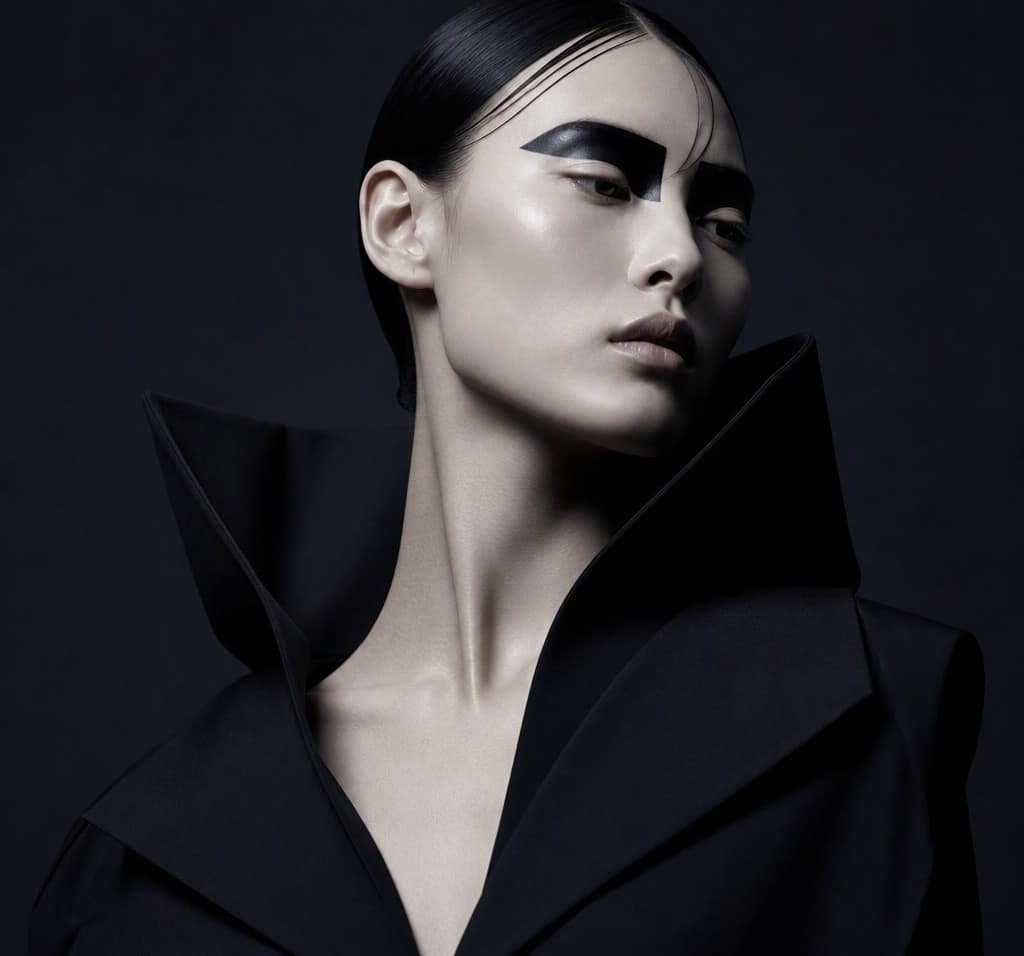
Architecting Human Identity Through Form, Light, and Material
In the abamode universe, makeup and costume design are not decorative layers
they are structural components of world‑building. Just as abastudio shapes space, light, and movement, abamode shapes the human presence within that space. Every face, every garment, every texture becomes part of a unified visual architecture.
abamode treats the human body as a designed environment, and makeup and costume function as its spatial extensions. Together, they create a coherent identity system that defines character, emotion, and narrative without relying on dialogue.
- The abamode Philosophy: Visual Identity as Architecture
abamode operates on a core belief: form communicates before language.
Makeup and costume design follow the same principles that guide the brand’s spatial and object design:
- Form as identity geometric clarity, intentional structure, controlled volume.
- Color as psychology palettes chosen for emotional and narrative impact.
- Texture as sensation materials that evoke physical and psychological response.
- Light as a design partner every surface is created with its light‑interaction in mind.
Makeup and costume are not separate departments; they are extensions of the same design logic.
- Makeup Design in abamode:
The Face as a Spatial Surface
In abamode, the face is treated like a micro‑architecture a surface that can be shaped, refined, or disrupted to express narrative.
Key Characteristics of abamode Makeup
- Minimal but intentional no unnecessary decoration; every mark has meaning.
- Architectural shading shadows used to sculpt, not beautify.
- Precision lines controlled geometry that echoes the brand’s spatial language.
- Subtle prosthetics structural modifications that feel natural yet designed.
- Hair as form hairstyles treated as volumetric elements, not accessories.
Narrative Function
Makeup in abamode builds characters for:
- fashion editorials
- conceptual video projects
- installation‑based performances
- experimental visual storytelling
Each face becomes a visual statement, aligned with the brand’s world.
- Costume Design in abamode:
The Body as a Constructed Volume
Costume design in abamode transforms the human body into a sculptural presence. Garments are not clothing they are architectural forms that redefine silhouette, movement, and emotional tone.
Key Characteristics of abamode Costume
- Architectural silhouettes sharp lines, controlled shapes, intentional proportions.
- Conceptual minimalism reduced elements with high narrative density.
- Material honesty raw yet luxurious textures that communicate authenticity.
- Meaningful details every stitch, fold, and closure serves a purpose.
- Monochrome or conceptual palettes colors chosen for psychological impact.
Applications
Costume design supports:
- fashion collections
- conceptual films
- artistic installations
- stage and performance environments
The result is a visual identity system that merges body, space, and narrative.
- Unified System:
The abamode Integration of Makeup & Costume
Makeup and costume in abamode are designed together as a single organism.
The harmony between face and garment is essential.
Core Integrations
- Skin tone ↔ garment color harmony or contrast based on narrative.
- Facial geometry ↔ silhouette geometry aligned structural language.
- Surface texture ↔ fabric texture shared tactile identity.
- Light behavior ↔ material behavior designed for the same illumination.
This integration ensures that the character feels coherent within the abamode world.
- The abamode Workflow:
From Concept to Execution
Step 1 -World Analysis
Understanding the spatial, emotional, and narrative environment.
Step 2 – Visual Identity Profile
- Moodboard
- Color palette
- Concept references
Step 3 -Design Development
Sketching makeup concepts, garment silhouettes, and material studies.
Step 4 – Prototyping & Testing
Makeup tests, costume fittings, and adjustments based on light and camera.
Step 5 – Final Execution
On‑set makeup application, costume dressing, and coordination with art direction.
This workflow ensures that every project maintains the signature abamode aesthetic.
- The Role of Makeup & Costume in the abamode Brand
abamode is not a fashion label it is a visual universe.
Makeup and costume design are essential pillars of this universe, shaping:
- character identity
- emotional atmosphere
- narrative direction
- brand signature
They complete the ecosystem that includes spatial design, object creation, installation art, and conceptual storytelling.


Leave a Reply